Every home solves the fresh air problem somehow. Most solve it by accident, a few solve it on purpose, and the difference shows up in how the home feels, how it smells after a week of rain, and what it costs to keep comfortable.
If you are planning a new home or a major renovation, ventilation is one of those decisions that quietly shapes everything else, and it is worth understanding the options before they are chosen for you. There are really four ways a home gets its fresh air. Here is a clear look at each.

1. Leaks: the accidental default
Most existing Australian homes are ventilated by their own gaps. Air finds its way in around window frames, downlights, skirting boards and power points, and finds its way out somewhere else. Nobody designed this, but it is doing most of the ventilation work in most houses. Research cited in the Australian Government's YourHome guide to ventilation and airtightness puts air leaks at 15 to 25 per cent of winter heat loss in buildings.
The trouble with accidental ventilation is that it answers to the weather, not to you. On a windy winter night it over-delivers, replacing warm air you have paid for with cold air you now have to heat. On a still, humid February day it barely delivers at all, right when you want moisture moving out. And the air it brings in is unfiltered, often arriving through wall cavities and roof spaces before it reaches your lungs.
Leaky homes are not ventilated well. They are ventilated randomly.
2. Opening windows: genuinely good, when conditions allow
Let us be clear: open windows are wonderful. On a mild afternoon with a breeze, nothing beats them, and no well-designed home should ever take them away from you.
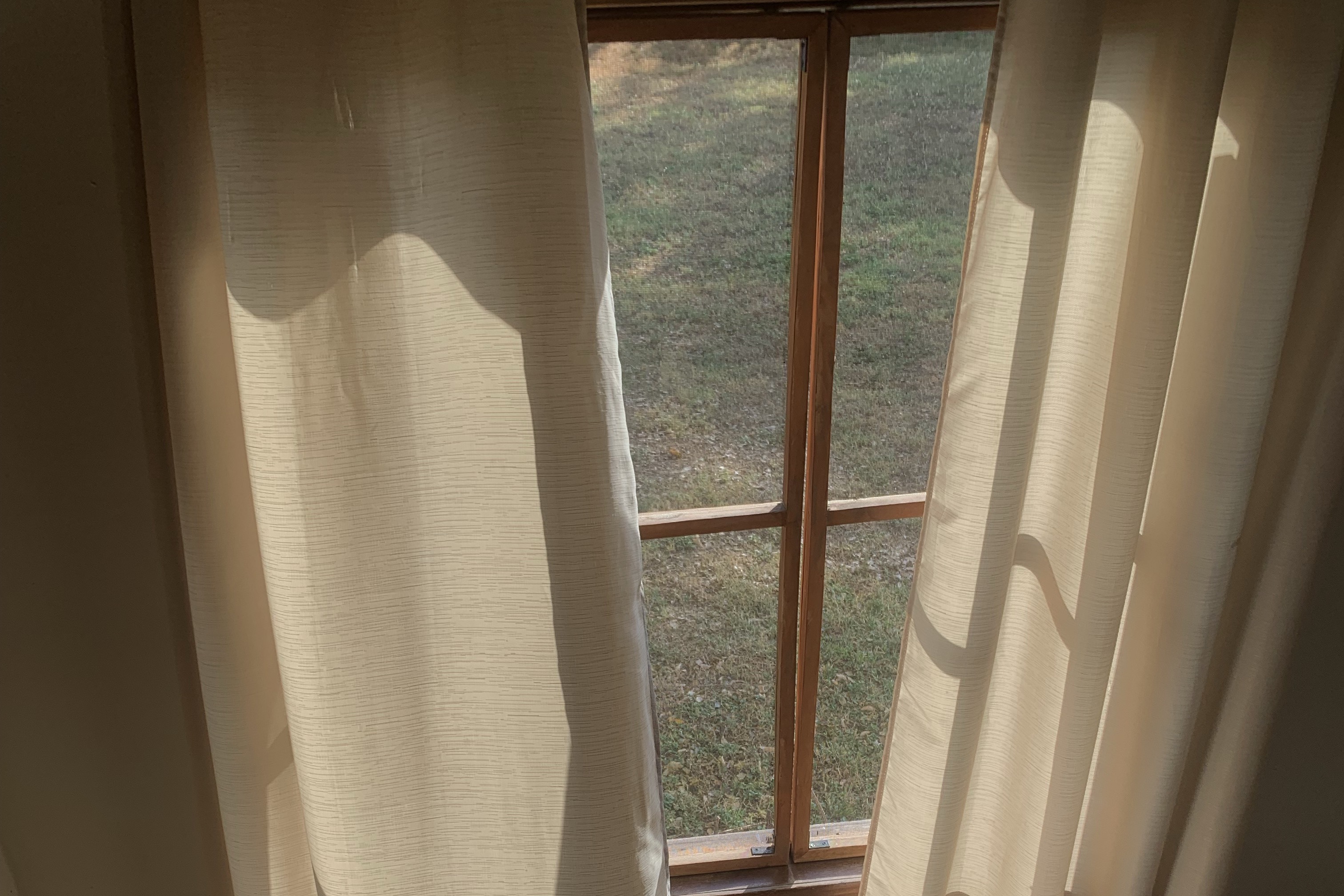
The limitation is the hours when the windows are shut, which in a real household is most of them. Nobody sleeps with the windows wide open through a July cold snap. They stay shut on a busy road because of the noise, on high-pollen days, when bushfire smoke is about, and whenever nobody is home. YourHome makes the same point plainly: window ventilation depends on someone opening the right windows, at the right times, all year round, which is not a standard anyone meets in practice.
So windows are the treat, not the system. The question is what ventilates the home during all the shut hours.
3. Exhaust fans: half the job, done properly
Bathroom and rangehood fans are the first piece of deliberate ventilation most homes get, and they matter. Pulling steam out of a bathroom and cooking moisture out of a kitchen at the source, before it drifts through the house, is exactly the right idea.
But fans only do half the job. They push stale air out; they do not decide where the replacement air comes from. In practice it gets dragged in through the nearest gaps, unfiltered and at whatever temperature the day is serving. Fans also tend to run only while someone remembers to run them, and the moisture a family produces does not keep office hours. A load of washing drying on a rack releases litres of water into the air with no fan anywhere near it.
Exhaust fans are necessary. In most homes they are just not sufficient.
4. A heat recovery ventilator: the whole job, on purpose
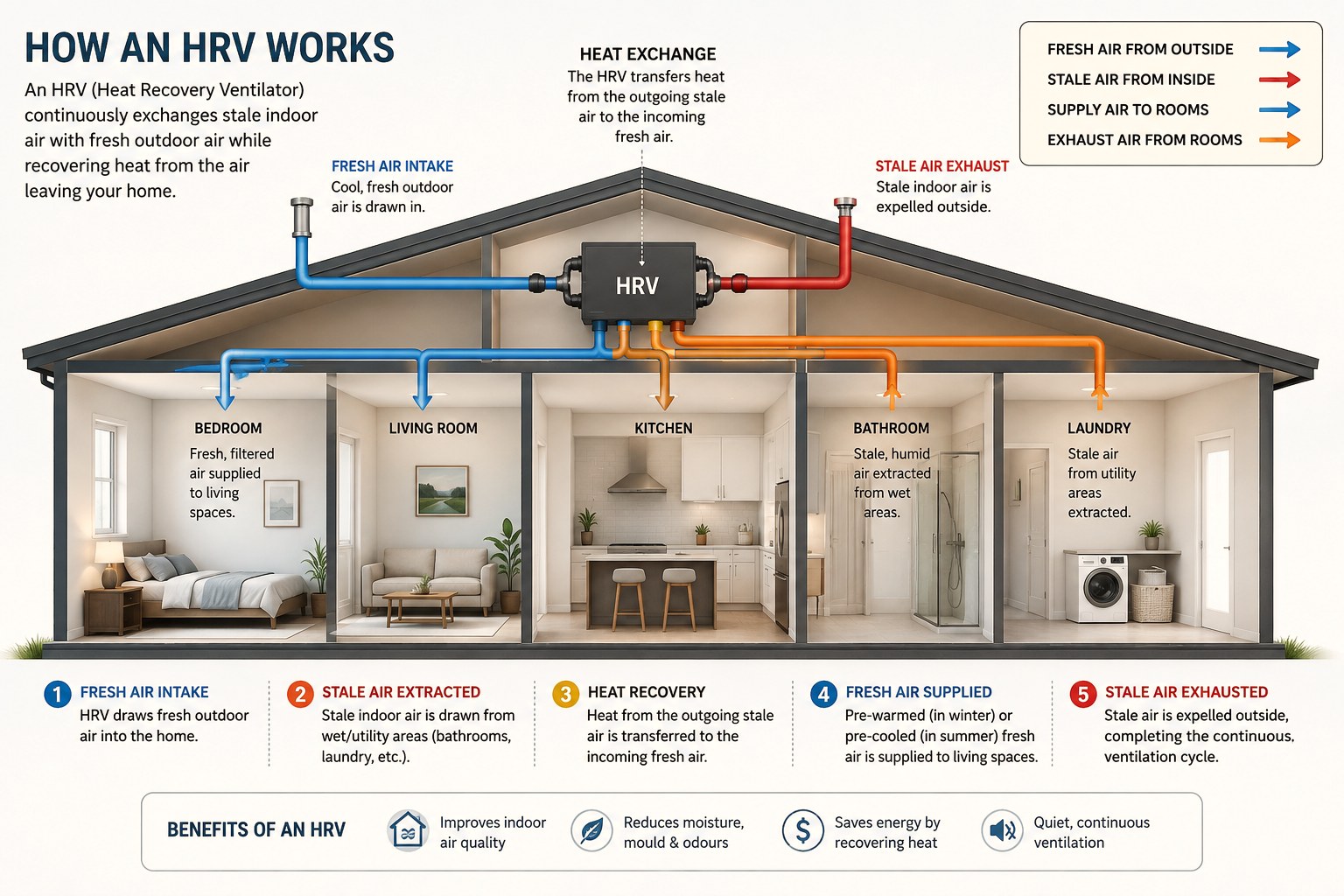
A heat recovery ventilator, or HRV, is what deliberate ventilation looks like when it is designed rather than improvised. It runs continuously and quietly, drawing stale, moist air out of the bathrooms, laundry and kitchen while supplying fresh, filtered air to the bedrooms and living rooms. Extraction at the source and filtered supply, both at once, around the clock.
The part that makes it viable is the heat recovery. The two air streams pass through a heat exchange core without ever mixing, and the outgoing air hands its warmth to the incoming air on the way past. In winter, air you have paid to heat warms the core as it leaves, and the cold fresh air picks that warmth up on the way in. In summer the same principle runs in reverse, keeping the cooling you have paid for while the hot outside air sheds its heat before it enters. An HRV typically recovers around 80 per cent of the energy you have already spent conditioning the air, which is why a home can be fully ventilated all winter without the heating bill knowing about it.
The Australian Passivhaus Association calls heat recovery ventilation the lungs of a Passivhaus, and it is standard practice in Passivhaus homes for exactly these reasons.
So which one does your home need?
A straight answer, because this is not an HRV sales pitch: it depends on the building around it.
In a genuinely leaky older home, an HRV cannot do its best work, because air keeps taking the accidental route around it. The gaps are doing the ventilating, badly, and the first money is usually better spent on the envelope: sealing, insulation, better windows. Good exhaust fans, well ducted and actually used, carry the wet rooms in the meantime.
It is when a home becomes airtight that ventilation stops being optional equipment and becomes part of the building's design. A well-sealed new build or a deep renovation holds its temperature beautifully, and precisely because it no longer leaks, its fresh air has to be provided deliberately. That is the point where an HRV changes from a nice idea into the thing that makes the whole approach work: the envelope keeps the comfort in, and the HRV keeps the air fresh, without giving the comfort back.
Which is why the ventilation conversation belongs at the design table, next to the insulation and the windows, not at the end as an accessory. Envelope and ventilation are one decision wearing two names.
Deciding early costs nothing
If you are weighing up a new home or a major renovation, this is one of the questions worth asking before the drawings are finished, while every option is still open and none of them costs anything to consider. We are happy to talk through what deliberate ventilation would look like for your project.
AGATHĒ builds architectural and Passivhaus homes across Sydney's North Shore, the Northern Beaches, the Hills district, the Central Coast and Newcastle, and their surrounds. Our founder Mitch Chan is a Certified Passivhaus Tradesperson, and we are members of the Australian Passivhaus Association. If you are working out how your project should get its fresh air, we are always happy to talk it through.
Start a ConversationNot at the conversation stage yet? That is completely fine. If this topic has you curious, the Healthy Homes newsletter is the easy way to keep learning, with no obligation attached.