Passivhaus
Coal Point
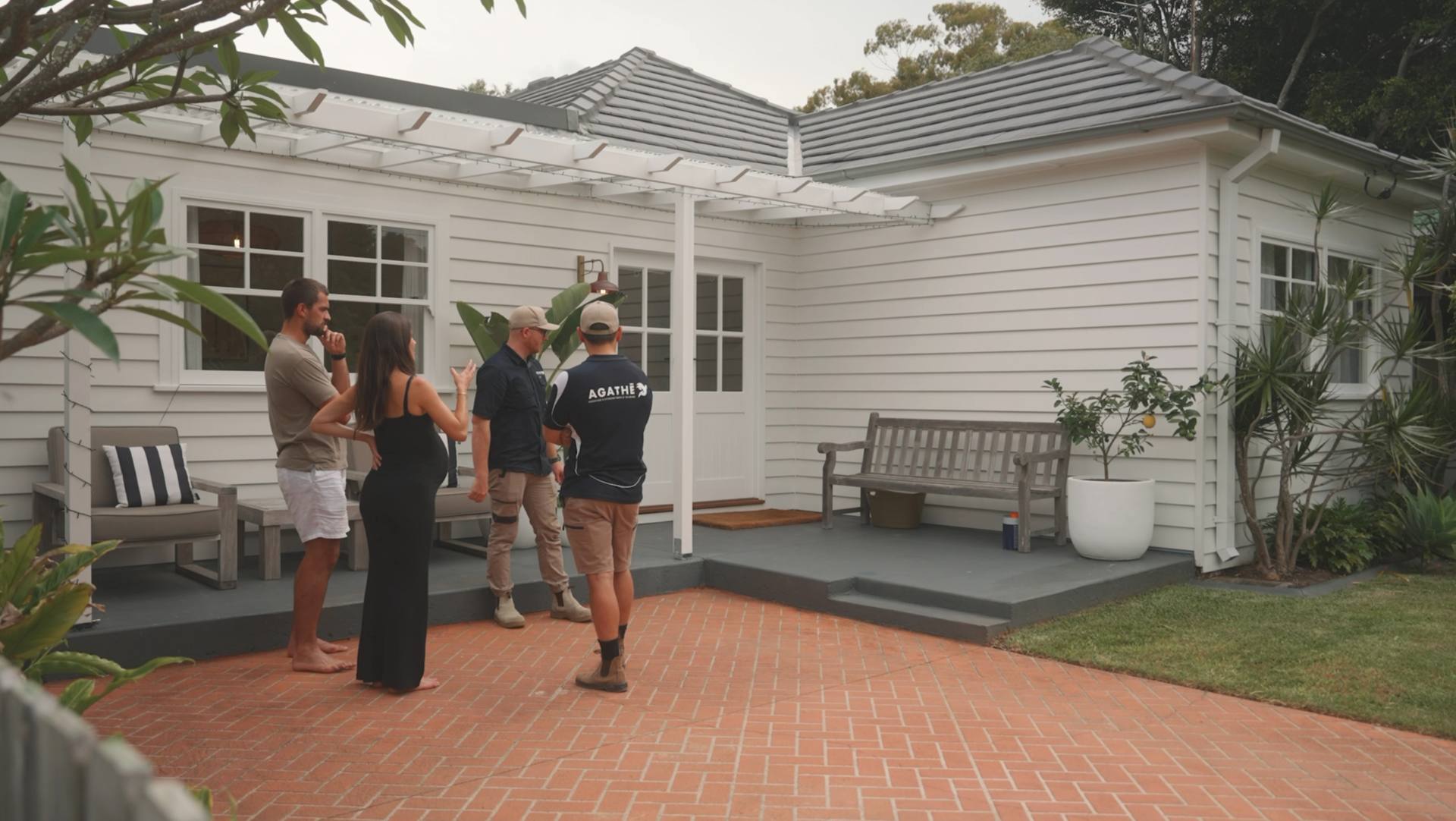
AGATHĒ builds architectural and Passivhaus homes at Coal Point: lakefront engineering for the peninsula's jetty-front blocks and morning fog.
AGATHĒ builds architectural and Passivhaus homes at Coal Point: lakefront engineering for the peninsula's jetty-front blocks and morning fog.
A certified Passivhaus is measured, not promised. An airtight, highly insulated envelope with continuous filtered fresh air keeps the whole home within a few degrees year-round without leaning on air conditioning. The result is a home that is quiet, free of draughts and condensation, dramatically cheaper to run, and independently certified to perform exactly as designed.
Coal Point runs its narrow peninsula into Lake Macquarie south of Toronto, and its best blocks go straight to the water: jetties, boatsheds, lake views from the living room. Lakefront living carries its own building physics: still water breeds fog and morning damp, humid air lingers in ways an ocean breeze would clear, and older homes on unsealed subfloors quietly wick moisture upward for decades. It is why so many lakeside houses feel damp even when nothing is visibly wrong. Passivhaus construction resolves it at the fabric level: a sealed, insulated envelope that moisture cannot penetrate, heat-recovery ventilation that holds indoor humidity in the healthy range around the clock, and warm internal surfaces that give condensation nowhere to form. The lake stays where it belongs: outside the glass.
Builder-led delivery of custom homes and Passivhaus builds, managed end to end.
Start the right way with our PAC-certified process, aligning design, budget and timeline before you build.
We work alongside your architect from the first sketch, so Passivhaus performance is designed in, not bolted on.
Scandinavian-inspired homes and cabins built to a healthy, high-performance standard.
Partial to full-scale renovations that transform your existing spaces into healthy, beautiful family living environments.
From design to delivery, we manage every detail for a smooth, on-time, on-budget build.
We build architectural and Passivhaus homes across Lake Macquarie, including Coal Point, and certified Passivhaus is the direction we are working in. Our team includes a Certified Passivhaus Tradesperson, we are members of the Australian Passivhaus Association, and every project starts with our structured pre-construction process so design, budget and performance targets are resolved before construction begins.
Life by the water has a moisture bill: still air over the lake, foggy mornings, and older homes with unsealed subfloors that wick damp upward. As NSW Health notes, persistent dampness needs its source fixed. No amount of airing the house out solves it for long.
Passivhaus construction attacks every path at once: a sealed, insulated envelope keeps moist air out of the structure, and balanced heat-recovery ventilation keeps indoor humidity in the healthy range around the clock. Lakeside, that is the difference between a house that smells like the lake and one that just looks at it.
Because warm indoor air is meeting cold glass. The mechanics are laid out in the Australian Government's YourHome guide to condensation. Still lake mornings and humid air keep plenty of moisture around Coal Point homes year-round, and single glazing gives it a cold surface to condense on. High-performance glazing keeps the inside pane warm, and heat-recovery ventilation removes humidity at its source: cooking, showers, breathing.
In a certified Passivhaus, streaming windows simply do not happen.
Because most Australian homes leak. Gaps around windows, doors, floors and downlights let the air you have paid to heat or cool escape, so the heater and the air conditioner never stop working. It is why the Australian Government's energy.gov.au guidance puts insulation and draught-proofing ahead of bigger heating and cooling systems.
A Passivhaus takes the opposite approach: a continuous, airtight, insulated envelope that holds a stable temperature year-round, verified by independent testing. The house itself does the work, not the equipment.
It is the exam a Passivhaus has to pass. A fan pressurises the home and measures exactly how much air leaks through the envelope. Certification requires no more than 0.6 air changes per hour, one of the strictest airtight construction standards in the world.
The point is proof. Anyone can claim a home is well sealed; a blower-door result is measured by an independent tester. It is the difference between a promise and a certificate, and it is why a certified Passivhaus performs exactly as designed.
Yes. Any window, any time. The difference is that a Passivhaus does not depend on open windows to stay fresh. The heat-recovery ventilation system supplies filtered fresh air around the clock, so the home stays comfortable and healthy even when it is sealed against a southerly, a heatwave or a week of rain.
It depends on the design, the site and the performance target, which is why we resolve cost early rather than guessing. Our pre-construction process starts with an early feasibility estimate against your concept plans, so you know whether the project is viable before committing to full documentation.
Running costs then work in your favour: a certified Passivhaus needs a fraction of the heating and cooling energy of a conventional home.
Often, yes. The certification pathway for existing buildings is called EnerPHit, and it is genuinely demanding work: airtightness, insulation and ventilation all have to be re-engineered together. Not every home is a candidate, and we will tell you straight if yours is not.
Many renovations land on a middle path: using Passivhaus components and detailing where they deliver the most benefit, without pursuing full certification.
Whether you are at the early thinking stage or ready to move, we are happy to have a clear, straight conversation. No obligation. We will tell you if we are not the right fit.