
Building a Passive House in Sydney
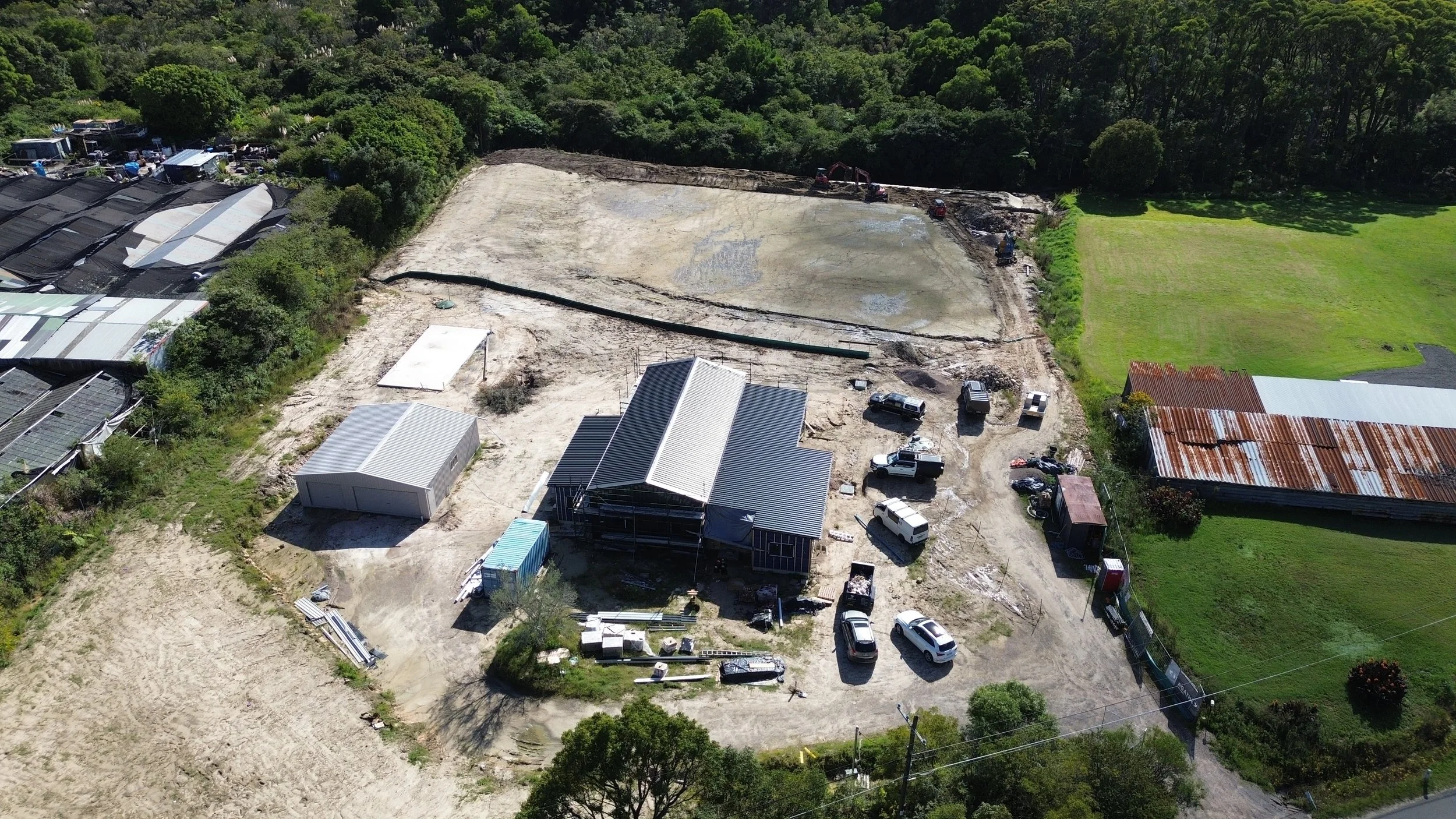
Mitch Chan, 01 May 2026
Passive House is one of those terms that gets misunderstood almost every time it comes up.
For some people it sounds technical and European — something relevant to cold climates and energy targets, but not particularly applicable to a Sydney home. For others it sounds expensive in a way that's hard to justify. And for a lot of people, it simply sounds unfamiliar, which is enough to move on.
What it actually describes is simpler than any of that. A Passive House is a home that feels noticeably better to live in — more consistent in temperature, fresher in air quality, quieter, and more comfortable across every season. Not because of better appliances or more sophisticated systems, but because of how the building itself was designed and built.
Once you've lived in one, or even spent a few hours in one, the difference is hard to ignore.
So what does Passive House actually mean?
At its core, Passive House is a design and construction standard focused on creating homes that maintain a stable, comfortable indoor environment with minimal reliance on active heating and cooling. As the Australian Passive House Association describes it, Passive House buildings provide a high level of occupant comfort while using very little energy for heating and cooling.
The key phrase there is "the building itself." Most homes are built to meet minimum compliance standards — they pass inspection, they look complete, and then they rely on mechanical systems to manage whatever discomfort the building creates. The heating unit compensates for the heat lost through the walls. The air conditioning manages the heat gained through the windows. The dehumidifier addresses the moisture that the building can't handle on its own.
Passive House takes a different approach. Instead of correcting problems after they arise, it designs the building so those problems are largely prevented. The result is a home that requires far less from its mechanical systems because the structure itself is doing most of the work.
Why these homes feel different
The difference between a standard home and a Passive House home is most apparent in the things you feel rather than see.
In a standard home, there are rooms that are noticeably warmer or cooler than others. There are cold drafts near windows in winter. There are days when the air feels heavy or stale, particularly in rooms that don't get much ventilation. These are not design failures — they are the predictable outcomes of building to a standard that prioritises compliance over performance.
In a well-executed Passive House, the temperature is consistent from room to room and floor to floor. You can stand next to a window on a cold Sydney winter morning and not feel the cold radiating off the glass. The air feels fresh without being obviously climate-controlled. The home is quiet. It responds slowly and gently to changes in outdoor conditions rather than amplifying them.
None of this happens by accident, and none of it happens through a single feature or product. It is the cumulative result of several decisions working together — decisions that, critically, have to be made before construction begins.
The five principles that make it work
Passive House design is built around five core principles. Each one addresses a specific way that standard homes lose their battle with heat, air, and moisture.
1. Continuous insulation
In most homes, insulation is installed in the cavities between structural elements. This creates a situation where the insulation itself is thermally effective, but the framing around it is not — heat flows through the structural elements as easily as if the insulation weren't there. Passive House design insulates continuously across the building envelope, including all junctions and connections, so there are no uninsulated pathways for heat to travel through.
2. Airtight construction
Airtightness is one of the most misunderstood aspects of Passive House. An airtight home is not a sealed home — it is a home where air movement is controlled rather than accidental. In a standard home, air moves unpredictably through gaps in the structure, carrying heat, moisture, and allergens with it. Airtight construction eliminates this uncontrolled movement, which prevents drafts, reduces condensation risk, and allows the ventilation system to do its job properly.
3. High-performance windows and doors
A standard double-glazed window has a centre-of-glass thermal performance that looks reasonable on paper, but the frame, the edge seal, and the installation detail can undermine that performance significantly. More importantly, a window that performs adequately in thermal terms can still create a cold zone near the wall in winter — cold enough to cause discomfort and condensation even if it technically meets code. High-performance Passive House glazing is specified for the complete assembly, not just the glass, and is designed so the inner surface temperature stays close to room temperature year-round.
4. Continuous mechanical ventilation with heat recovery
A well-insulated, airtight home needs a controlled source of fresh air — and that source needs to be mechanical, not incidental. A heat recovery ventilation (HRV) system continuously draws stale air out of the home and introduces fresh, filtered air, recovering up to 90% of the heat energy from the outgoing air in the process. The result is consistent indoor air quality, balanced humidity, and a home that never feels stuffy regardless of how long the windows have been closed.
5. Thermal-bridge-free construction
A thermal bridge is any point in the building envelope where heat can bypass the insulation — a steel fixing, an exposed concrete slab edge, a structural connection that punctures the insulated layer. These points create localised cold spots, which in turn create condensation risk and energy loss. Thermal-bridge-free construction eliminates or minimises these details through careful design and site execution.
Where building science and building biology come in
Passive House sits at the intersection of two distinct disciplines, and understanding the difference between them is worth a moment.
Building science is concerned with how a home performs as a physical system — how heat, air, and moisture move through the structure, and how to design that movement to be predictable and manageable. Passive House is fundamentally a building science framework.
Building biology is concerned with how the built environment affects the people living inside it — air quality, material off-gassing, electromagnetic exposure, acoustic comfort, light, and the overall relationship between the occupant and their home.
These two disciplines reinforce each other, but they are not the same thing. A home can meet Passive House energy targets and still contain materials that off-gas VOCs. A home can have excellent airtightness and inadequate filtration on its ventilation system. Building science ensures the home performs correctly as a structure. Building biology ensures that the environment inside that structure is genuinely healthy for the people living in it.
At AGATHĒ, we treat both as non-negotiable. (You can read more about how these two approaches work together in our article on Building Science and Building Biology)
What this means for a Sydney home specifically
There is a persistent assumption that Passive House is a European standard designed for European climates — cold winters, predictable conditions, and a heating-dominated energy profile. That assumption is worth pushing back on directly.
Sydney's climate presents a different set of challenges, not a simpler one. High humidity, coastal exposure, significant seasonal temperature variation, and cooling-dominated summers all place demands on a building envelope that Passive House principles are well-equipped to address. The specific details change — solar control becomes as important as insulation, vapour management strategies differ from those used in alpine climates, and mechanical cooling remains relevant in a way it isn't in Scandinavia — but the underlying framework is not only applicable, it is arguably more valuable in a mixed climate than in a purely cold one.
Working on the Northern Beaches, Central Coast, and across greater Sydney, the conditions we encounter most often — salt air, high summer humidity, homes on north-facing slopes with significant solar exposure — are exactly the conditions where the thermal-bridge-free, airtight, continuously ventilated Passive House approach produces the most measurable improvement over standard construction.
A personal note — becoming a Certified Passive House Tradesperson
While putting this article together, it felt worth sharing something that happened recently, because it speaks directly to why we approach building the way we do.
I recently completed the certification program to become a Certified Passive House Tradesperson through the Australian Passive House Association — not because I was chasing a credential, but because I wanted a more rigorous understanding of how these principles are actually carried through on site.
The gap between a Passive House that performs well on paper and one that performs well in reality comes down almost entirely to execution. How the insulation is installed at junctions and penetrations. How airtightness is achieved and tested. How the different layers of the building envelope interact under real conditions. These are not details you can learn from a specification document. They require hands-on understanding and the kind of critical thinking that only comes from going deep into the technical training.
For me, this was about making sure that what we build reflects the thinking behind it. That the homes we deliver to our clients feel the way they were designed to feel — not just in the months after completion, but over the decades that follow. (For those who'd like more detail on what Passive House tradesperson certification involves, the APHA resource is linked here.)
The decisions that determine the outcome
There is one thing about Passive House design that surprises most people when they first encounter it: the decisions that determine how a home will perform are not made during construction. They are made in the weeks and months before construction begins.
Wall system selection, insulation strategy, ventilation design, window specification, junction details, material choices — these are all design-stage decisions. Once the frames go up and the structure starts to take shape, the window for making these calls cleanly and cost-effectively closes quickly. Changes made after construction has begun are expensive, disruptive, and sometimes impossible without compromising what has already been built.
This is why the planning and design stage is not a preliminary step before the real work starts. It is the most consequential stage of the entire process.
It is also why, at AGATHĒ Builders, every project begins with the PAC Process — a structured pre-construction phase designed to resolve every significant decision before a single approval is lodged or a tool is picked up on site. By the time construction begins, the home has already been designed to perform. What follows is execution.
Where to go from here
If you are planning a custom home, renovation, or extension and you want to understand whether Passive House principles are right for your project, the best place to start is with clarity on what you should be deciding, and when.
We've put together a checklist of the 20 questions worth asking before you sign a building contract — covering thermal performance, moisture management, ventilation, material selection, and the pre-construction process. It's free, and it will give you a clear picture of which decisions in your project have already been made and which haven't.
Download the Healthy Home Checklist
If you're further along in your thinking and want to talk through your specific project, a PAC Discovery Call is where every project we take on starts — a focused conversation to understand what you're planning and whether we're the right fit to help you do it.
FAQs
-
A Passive House (or Passivhaus) is a high-performance building standard designed to create homes that maintain stable indoor temperatures, high levels of comfort, and healthy indoor air quality with very low energy demand. Rather than relying heavily on heating and cooling systems, Passive House focuses on the performance of the building envelope itself through insulation, airtightness, high-performance windows, ventilation, and thermal-bridge-free construction.
As the Australian Passive House Association explains:
“Passivhaus buildings use very little energy to achieve a comfortable temperature year-round.”
The standard is based around five core principles:
continuous insulation
airtight construction
high-performance windows
heat recovery ventilation
thermal-bridge-free detailing
-
For many homeowners, yes — particularly in Sydney’s coastal and humid environments. Passive House principles help improve thermal comfort, indoor air quality, energy efficiency, and moisture management across a range of climates, including warm temperate and humid regions like coastal New South Wales.
The Australian Passive House Association states:
“Passivhaus is suitable for all climates and building types.”
That’s important in Sydney, where homes often struggle with overheating, humidity, condensation, and inconsistent indoor temperatures.
-
Many people notice the comfort immediately. Temperatures remain more stable throughout the home, drafts are reduced, outside noise is lowered, and filtered fresh air is continuously introduced through the ventilation system. The result is a quieter, more comfortable, and healthier indoor environment year-round.
According to the Australian Passive House Association:
“The result is an exceptionally comfortable, healthy and efficient building.”
A well-designed Passive House doesn’t feel overly mechanical or sealed off — it simply feels calm, steady, and comfortable throughout the year.
-
Yes — when they are properly designed and ventilated. Passive House airtightness is about controlling unwanted air leakage through the building envelope while providing continuous filtered fresh air through a dedicated mechanical ventilation system. This helps improve indoor air quality while reducing condensation and mould risk.
The Australian Passive House Association explains:
“Airtightness is essential to prevent uncontrolled air leakage.”
Importantly, Passive House buildings are not relying on random gaps and drafts for ventilation. Fresh air is introduced intentionally and continuously through a controlled ventilation system.
-
The cost varies depending on the level of performance, site conditions, complexity of design, and construction detailing. While Passive House projects can involve a higher upfront investment than standard construction, many homeowners value the long-term benefits around comfort, durability, energy efficiency, and indoor environmental quality.
Because Passive House focuses heavily on the quality of the building envelope and construction detailing, decisions made during planning and design have a significant impact on overall performance and long-term value.
-
Absolutely. Many Passive House principles — including improved insulation, airtightness, high-performance glazing, thermal bridge reduction, and controlled ventilation — can be applied to renovations and extensions to significantly improve the comfort and performance of existing homes.
The Australian Passive House Association recognises that Passive House principles can be applied across both new builds and retrofit projects.
-
Yes. In humid coastal climates like Sydney’s Northern Beaches, moisture management, ventilation, solar control, and thermal performance become even more important. Passive House principles help address these conditions through airtight construction, controlled ventilation, insulation continuity, and careful building-envelope design.
As the Australian Passive House Association notes:
“Passivhaus buildings maintain comfortable indoor temperatures with minimal heating and cooling.”
That level of performance becomes particularly valuable in climates dealing with humidity, solar exposure, and changing seasonal conditions.
-
You should ask how they approach airtightness, insulation continuity, ventilation design, thermal bridge detailing, glazing performance, and moisture management. It’s also important to understand whether these details are resolved early in the planning stage before construction begins.
Passive House performance relies heavily on careful coordination between design, detailing, and construction sequencing — not just product selections later in the build.
